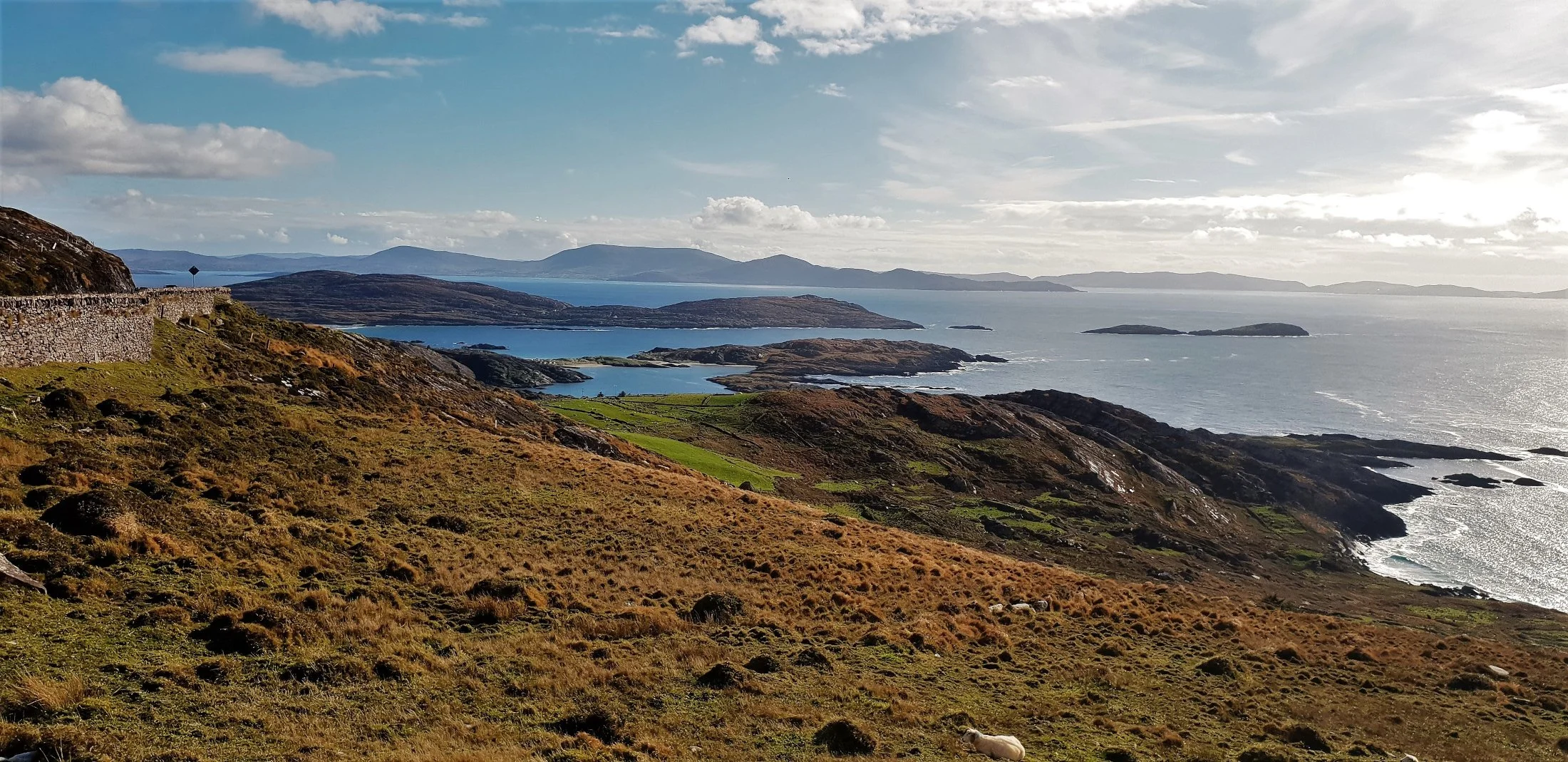
Before Covid slammed the door on travel, I visited Ireland three times, for several weeks at a time, searching for traces of Christianity-before-St.-Patrick. My goal was to create a credible background for my YA Historical Fantasy novel, set at the time when Irish Paganism first encountered Christianity. To keep its themes contemporary, my main character was a sceptical, 21st century, fifteen-year-old lad — Kieran — unwillingly transported back to the fourth century.

My unorthodox premise was that in the fourth century a band of Middle Eastern monks had set sail from the Mediterranean and travelled along Ireland’s West coast, and places further north, in search of fellow monks. I based this on a sentence written in 1887 by Henry Charles Lea — an authority on the Papal Inquisitions:

“in the period of the commencement of persecution involving judicial capital punishment for heresy, that at the time of the execution of Priscillian with six of his followers in 385 AD, that others were banished to a barbarous island beyond Britain.” *

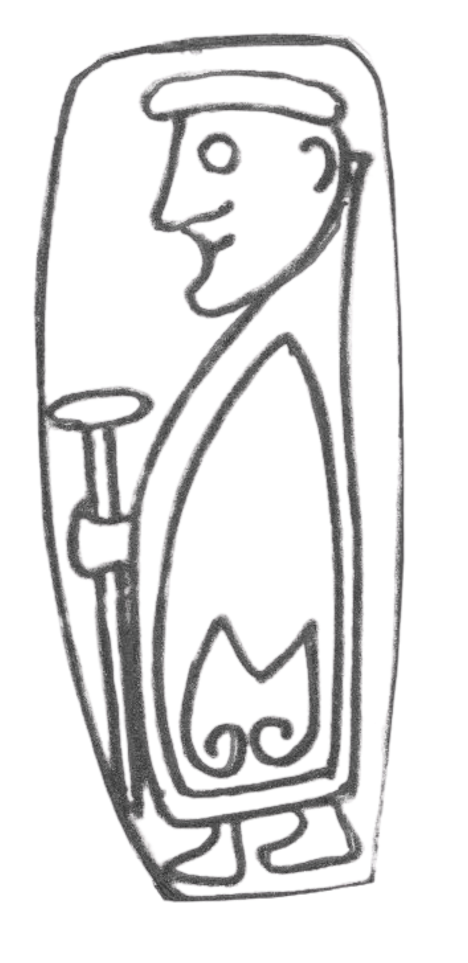
My interest was also personal. My father-in-law is a Copt, or Egyptian Christian, and together we have long puzzled over the unlikelihood of finding depictions of flabella and peacocks, as well as the physical remains of Tau crosses, at various early Christian sites in Ireland. At a more prosaic level, the incongruity of the place name ‘dysert / dysart / disert’ struck me whenever I found myself standing in a lush, grassy field during one of Ireland’s frequent downpours, despite how normalized the word has become. Over two hundred occurrences. Yes, ‘dysert’ signifies a hermitage, or early medieval monastic settlement, but it derives from the Latin word for a desert.

Who were these very early Mediterranean (and, possibly, Middle Eastern) monks? How did they adjust to cultural differences, including local pagan practices, but also the climate? And what must have the Irish people have thought of early Christians they encountered? We have St. Patrick’s account, but very little else.

In addition to the getting the historical background as accurate as possible given the paucity of source material, I had to devise a way to transport fifteen-year-old Kieran onto the Burren in County Clare. The fourth century was a time of huge rivalry for kingship between Munster (ancient Mumu), and Connaught (ancient Connacht). If Kieran survived these factional wars, I had to return him to the 21st century. So there were (fictional) challenges.

What follows is a factual account of my travels in Ireland, alongside my struggle to re-frame what I learnt into the fictional narrative of my novel. I’ve changed the names of certain people but all the places I visited can be found on O.S. maps.

*A History of the Inquisition of the Middle Ages, vol. 1, Chapter V: Persecution: Growth of Intolerance in the Early Church, New York: Harper & Brothers 1887.

Bring your
brand to life

Welcome people to your site with an introduction that’s short, sweet, and sounds like you.

Learn more